Let’s Talk about Lifestyle Mockups: A Shared Practice, Not a Secret
- Mark as New
- Bookmark
- Subscribe
- Mute
- Subscribe to RSS Feed
- Permalink
- Report Inappropriate Content
12-08-2025 10:07 PM
Lifestyle mockups and lifestyle advertising have been around for decades. This isn’t some new invention or hidden secret that only a few know of. it’s a practice that’s been taught in fashion merchandising schools, used in catalogs, and refined in every era of product presentation. From department store window displays in the 1950s to styled magazine ads in the 70s, lifestyle imagery has always been about one thing: helping customers imagine themselves with the product.
Fast forward to today, and POD sellers are just continuing that tradition in digital form. And here’s the truth: nobody should be paying to learn how to do lifestyle mockups. The information is already out there, free and accessible. A quick Google search will bring up millions of “how‑to” guides, templates, and tutorials.
What really makes lifestyle mockups successful isn’t the technical side it’s the ideas and prompts behind them. Talking with other POD creators, sharing what settings work (cozy home scenes, outdoor adventures, styled fashion shots), and swapping prompts is often the best way to learn. Community conversations spark inspiration that no single class can capture.
I have another discussion at the community forum where creators are sharing what free AI’s are best for mockups, what prompts work, and problems that they are having. It’s a great discussion because we are helping each other. That is how you learn more about lifestyle mockups.
I searched online for the historical timeline of mockups through the years and this is what I found…sharing just for fun.
1950s–1960s: Department store catalogs and window displays staged products in lifestyle scenes.
1970s–1980s: Magazine ads and fashion shoots leaned heavily on lifestyle imagery to sell products.
1990s: Digital tools like Photoshop made polished mockups easier to create without full photo shoots.
2000s–2010s: E‑commerce marketplaces adopted lifestyle mockups as standard practice for online selling.
Today: POD sellers use digital mockups and AI tools to place products in endless lifestyle contexts.
Let’s talk about lifestyle Mockups:
How do you use lifestyle mockups in your store?
What prompts or settings have helped your products connect with customers?
Do you prefer natural everyday scenes or more styled, aspirational ones?
- Mark as New
- Bookmark
- Subscribe
- Mute
- Subscribe to RSS Feed
- Permalink
- Report Inappropriate Content
12-08-2025 11:48 PM
Okay I will answer the questions first
How do you use lifestyle mockups in your store?
I fall back on my years of being an Area Visual merchandiser and use mockups the way I did when I did window displays. The lifestyle mockup helps customers picture my products in their own lives. A mug looks boring floating on a white background, but put it on a messy desk with a laptop and suddenly it feels like their morning.
What prompts or settings have helped your products connect with customers?
I lean into prompts that feel lived‑in: “cozy kitchen table,” “sunny porch,” “romantic cottagecore is my focus for spring lifestyle mockups” I think customers want to see the product in a scene that feels familiar.
Do you prefer natural everyday scenes or more styled, aspirational ones?
Depends on the product. Everyday scenes make mugs, totes, and homegoods feel relatable. But if I’m showing off something seasonal or decorative, I’ll go aspirational styled like a magazine spread. It’s a balance: sometimes you want “real life,” sometimes you want “Pinterest life.”
- Mark as New
- Bookmark
- Subscribe
- Mute
- Subscribe to RSS Feed
- Permalink
- Report Inappropriate Content
12-09-2025 09:00 AM - edited 12-09-2025 09:14 AM
Trying to do multiple pics and blocks of text and it just looked terrible so never mind.
- Mark as New
- Bookmark
- Subscribe
- Mute
- Subscribe to RSS Feed
- Permalink
- Report Inappropriate Content
12-09-2025 09:24 AM
When you take courses from a professional, you aren't just paying to learn a technique, you are paying for their critique of your work to ensure that your design is high quality. So yes I have paid to take many art classes and photoshop classes and advertising classes from pros to make sure that my work is first rate.
- Mark as New
- Bookmark
- Subscribe
- Mute
- Subscribe to RSS Feed
- Permalink
- Report Inappropriate Content
12-09-2025 10:01 PM
My post was not about art classes. I’ve taken many courses throughout my career in fashion merchandising, and as a writer I’ve also taken creative writing courses, as well as internet marketing. I think it’s always good to keep learning and stay up to date. But my post was specifically about lifestyle mockups as a merchandising practice. These have been part of retail and advertising since the 1950s, taught in fashion merchandising programs and refined through decades of catalogs, window displays, and styled ads. I draw on my own background in visual merchandising, where lifestyle displays were always about helping customers imagine products in their own lives. That’s why I see lifestyle mockups today as a continuation of that tradition, not a secret skill. What makes them successful isn’t just technique, but the ideas and prompts behind them, and that’s why community conversations are so valuable. I’d like to keep the focus on lifestyle mockups themselves. In my post I asked a few questions about how creators are using them in their stores what kinds of scenes or prompts have helped products connect with customers, and whether you lean toward everyday settings or more styled ones. I’d be interested in your answers if you’d like to share with others.
- Mark as New
- Bookmark
- Subscribe
- Mute
- Subscribe to RSS Feed
- Permalink
- Report Inappropriate Content
12-10-2025 03:35 PM
And my point was that you need professional training AND critiques to get art, which included mockups , correct. Somewhere in your posts you said that there was never any need to pay for a course, because of the free stuff that was available. Honestly, I have seen so much bad free information on Youtube and Google that I appreciate a class taught in a credible educational intuition and vetted by professionals. So I think this is quite on topic on how to make mockups.
- Mark as New
- Bookmark
- Subscribe
- Mute
- Subscribe to RSS Feed
- Permalink
- Report Inappropriate Content
12-10-2025 04:11 PM
some people do prefer structured courses, and that can be valuable. My point was simply that lifestyle mockups aren’t a secret skill; they’re part of a merchandising tradition that’s been taught and refined for decades. Much of that knowledge is freely available, and I share prompts and workflows because I believe community exchange is just as powerful.
From my time at the Art Institute, I also learned that while technique can be taught, the spark of art itself has to come from within. You can refine skills, but you can’t teach someone to feel or see creatively if that instinct isn’t there. That’s why I emphasize prompts and collaboration because they help those who already have that spark grow it further.
My own background in visual merchandising taught me that lifestyle displays are about ideas and context, not just technique. That’s why I focus on prompts and community conversations because the creative spark often comes from sharing with fellow creators. We all learn differently, and that’s fine. What matters most is keeping the focus on how lifestyle mockups help customers connect with products.
- Mark as New
- Bookmark
- Subscribe
- Mute
- Subscribe to RSS Feed
- Permalink
- Report Inappropriate Content
12-10-2025 04:37 PM - edited 12-10-2025 04:39 PM
Welp, I did take a paid course on Skillshare for making mockups. But it did not focus on lifestyle arrangements but rather on how to paint plausible shadows in Photoshop, blend modes to make designs sink into fabric, that sort of technical stuff.
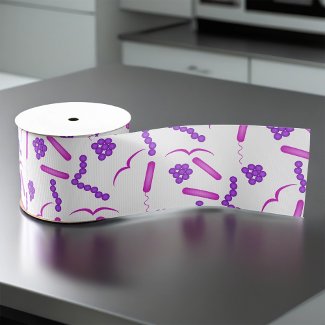
Anyway, in an earlier post I attempted to post blocks of text interspersed with photos and that did not work out so I'll just say I do like to do lifestyle mockups (now made far easier with AI) but they may look a little odd to those not in my target niche. Below I have an example of microbiology ribbon set in a lab. It may look weirdly clinical and an add choice for gift wrap but my intent is to make it relatable for people who also work in labs. That's why it's on a lab bench instead of in a living room. I want it to jump out to people who recognize this lab bench as their work area.
- Mark as New
- Bookmark
- Subscribe
- Mute
- Subscribe to RSS Feed
- Permalink
- Report Inappropriate Content
12-10-2025 04:38 PM
- Mark as New
- Bookmark
- Subscribe
- Mute
- Subscribe to RSS Feed
- Permalink
- Report Inappropriate Content
12-10-2025 05:23 PM
I think you’ve highlighted something important technical skills like shadows and blend modes can absolutely be taught in courses, but lifestyle mockups are about context and resonance. Your microbiology ribbon example is a perfect case: it may look unusual outside the niche, but for people who recognize that lab bench, it’s instantly relatable.
That’s why I emphasize prompts and collaboration. The spark of art comes from within, and lifestyle mockups let us shape environments that connect with specific audiences. Whether it’s a cozy living room or a clinical lab bench, the goal is the same: helping customers see themselves in the product. Thanks for sharing!
- Mark as New
- Bookmark
- Subscribe
- Mute
- Subscribe to RSS Feed
- Permalink
- Report Inappropriate Content
12-10-2025 09:56 PM
This lifestyle mockup works because it doesn’t just show a product, it invites a moment. I can see myself tucked under that floral duvet, sipping tea and nibbling the little pastry before the day begins. It’s the kind of scene that makes you pause and breathe. Can you imagine yourself there too… (created with Google Gemini Free AI mockup)

- Mark as New
- Bookmark
- Subscribe
- Mute
- Subscribe to RSS Feed
- Permalink
- Report Inappropriate Content
12-10-2025 01:58 PM
I agree with what others have said it’s important to know where tips are coming from, and whether there’s expertise or education in the field of visual arts. That’s why I think it helps to know a little bit about me.
I spent ten years as an Area Visual Merchandiser, overseeing the Florida division of Episode USA stores under Jeffrey Fang of the Fang Brothers in Hong Kong, and working with Richard Hand, U.S. Director of Visual Merchandising, at the corporate offices in New York City on the Avenue of the Americas. I even had the privilege of meeting Carolyn Wright Freeman, the designer behind Episode, during Fashion Week in Manhattan. I stayed with Episode USA until it was sold to Mothers Work.
It was a dream job that came through hard work and persistence. I have a résumé, awards, and a portfolio, but what matters most is the desire to help others. I’m not monetizing anything here what I share is free, offered to help fellow creators learn more. I build my own prompts, I train AI, and I make my living teaching about AI in other contexts.
I share freely because I believe in collaboration. My background is in visual merchandising, and my goal here is to encourage and support fellow creators.
- Mark as New
- Bookmark
- Subscribe
- Mute
- Subscribe to RSS Feed
- Permalink
- Report Inappropriate Content
12-10-2025 07:03 PM
When it comes to youtube videos. I really like the ones from Official Zazzle. so helpful and there is one where you can ask a question. Then on the official Zazzle blog, they share many lifestyle mockups that are inspiring . When I became an associate back in 2009 there was the Zazzle learning labs...so helpful.
- Mark as New
- Bookmark
- Subscribe
- Mute
- Subscribe to RSS Feed
- Permalink
- Report Inappropriate Content
12-11-2025 04:46 AM
Very new to lifestyle mock ups so they are a bit basic. 
So I tried this

Then thought how about this sort of thing?

The first one shows three views, which I like as it shows the aspects of the design, the other two are more "active".
Very much work in progress.😁
- Mark as New
- Bookmark
- Subscribe
- Mute
- Subscribe to RSS Feed
- Permalink
- Report Inappropriate Content
12-11-2025 01:13 PM - edited 12-11-2025 01:22 PM
You’re off to a strong start the setting and energy feel authentic, and the pose works well for an active scene. As you keep practicing, you might try a slightly different angle so the text on the (3 image leggings is easier to read. But overall, you’re definitely moving in the right direction. Customers will definitely relate to your lifestyle mockup. Thanks for sharing
- Mark as New
- Bookmark
- Subscribe
- Mute
- Subscribe to RSS Feed
- Permalink
- Report Inappropriate Content
12-12-2025 02:08 AM
In response to a comment about Canva somewhere I have been digging a little deeper. I managed this and it was quite a bit quicker. I like the multiple display of options. Not sure whether it's good marketing or over crowding. I 'll try it and see.
- Mark as New
- Bookmark
- Subscribe
- Mute
- Subscribe to RSS Feed
- Permalink
- Report Inappropriate Content
12-12-2025 04:25 AM
This looks great for a product ad layout super clean and clear, and it shows all the variations really well. For a lifestyle mockup though, the idea is a little different. Lifestyle mockups usually show the product being worn or used in a real‑world moment, something that feels a bit “lived in” and natural. Think: someone stretching in the leggings, walking into a store, or just moving in a way that tells a little story. Yours is more of a flat presentation, which is perfect for ads or listing images, but lifestyle mockups lean more into mood, environment, and context. Both have their place it just depends on what you’re aiming for.
- Mark as New
- Bookmark
- Subscribe
- Mute
- Subscribe to RSS Feed
- Permalink
- Report Inappropriate Content
12-12-2025 04:43 AM - edited 12-12-2025 04:54 AM
Hey Martin
this feels like a test.
Yesterday you served up perfect lifestyle mockups movement, mood, story. Today? Product ad layout, clean and flat. You know the difference, so I’m guessing you’re checking if I do too.
I wasn’t comfortable with Canva…a lot going on there. I like simple AI like Gemini and writing my own prompts. Have you tried Bing DALL·E 3. If you do tell me what you think.
- Mark as New
- Bookmark
- Subscribe
- Mute
- Subscribe to RSS Feed
- Permalink
- Report Inappropriate Content
12-12-2025 04:52 AM
Hi @Susang6 it's OK no testing of you going on, more my indecisive thoughts.😁 I look at the lifestyle mock up on a page on my phone and think it doesn't really let the viewer see the design. The Product add layout with a clean and flat approach lets the viewer see the design. Which is best for the Zazzle main image? I have no idea. For a blog post I guess it's a bit more obvious with the lifestyle shot being the winner.
Great job in really getting me thinking about all this, so a big "THANK YOU" for that.😁
- Mark as New
- Bookmark
- Subscribe
- Mute
- Subscribe to RSS Feed
- Permalink
- Report Inappropriate Content
12-12-2025 05:01 AM
Flat mockups definitely have their place they’re great for showing the product clearly. On the product page, though, you’ve got a few media slots to work with, and that’s where you can really elevate the presentation. I like to mix different looks so customers get both clarity and connection. A flat ad-style mockup is perfect for showing all angles of something like leggings front, back, side, waistband detail. Then I pair that with a lifestyle mockup so the customer can imagine themselves actually using it. That combination sells the product better than either one alone. For example, one of my favorite mug mockups is the ‘messy desk’ scene the laptop, the scattered papers, and the steaming cup of coffee. Everyone recognizes that moment. It’s relatable, it’s warm, and it makes the product feel like part of real life.
- Mark as New
- Bookmark
- Subscribe
- Mute
- Subscribe to RSS Feed
- Permalink
- Report Inappropriate Content
12-12-2025 05:06 AM
@Susang6 . Ahhh I was just coming around to the idea of a flat layout as the main Zazzle image and then a lifestyle shot as the second image. On a side note my coffee consumption is up as I do enjoy a coffee as I think.😂
- Mark as New
- Bookmark
- Subscribe
- Mute
- Subscribe to RSS Feed
- Permalink
- Report Inappropriate Content
01-20-2026 01:01 AM
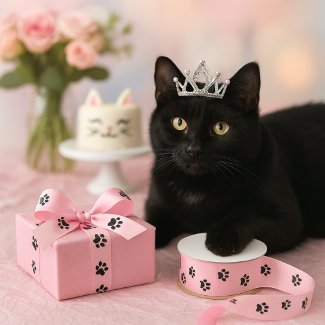
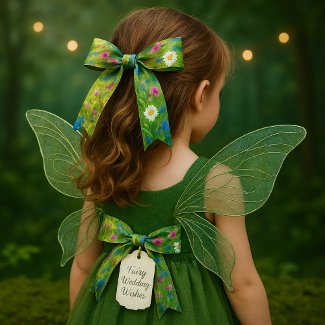
Hey Martin I don't know if you are following this discussion still...but I just created a new prompt and I was excited and wanted to share...the ribbon, all of my past mockups were flat, totally boring and I thought how could I attract customers, so they could relate to the ribbon...the idea was to turn browsers into buyers...so I came up with a unique twist...what do you think of my new lifestyle mockups?
- Mark as New
- Bookmark
- Subscribe
- Mute
- Subscribe to RSS Feed
- Permalink
- Report Inappropriate Content
01-20-2026 08:35 AM - edited 01-20-2026 08:37 AM
Those are awesome, Susan!
I'm running into both Gemini and Copilot throwing tantrums 🙂
They refuse to create square images, not matter what I say. Also, they have safety concerns just about anything that I simply can't imagine could upset anyone in any way, shape or form. And then bluntly refuse to create anything at all 🙂
The image of toddlers screaming in the middle of the supermarket aisles comes to mind.
On a side note: are subscriptions to a topic not working any more???

- Mark as New
- Bookmark
- Subscribe
- Mute
- Subscribe to RSS Feed
- Permalink
- Report Inappropriate Content
01-21-2026 11:25 AM - edited 01-21-2026 11:26 AM
I have noticed even the simplest prompts will get flagged. Example yesterday I asked Bing Dalle 3 AI to create a banner for my Easter kitchen collection and it was flagged and is now under review. I have no idea why? It was Easter, bunnies and spring flowers..a festive holiday banner with a few holiday products to represent the kitchen decor. Copiolot that is free is always updating, I pay for copilot and turned on memory which helps, but find every update I have to go back and explain how I want mockups done. (clarity and image resolution) seem to be a problem, but occasionally if the print is small I will get scary mockups. Any pattern that is busy is not good for copilot. No problems with Gemini so far... I gave up on mockup size...I have to resize every single one. Its a process.
- Mark as New
- Bookmark
- Subscribe
- Mute
- Subscribe to RSS Feed
- Permalink
- Report Inappropriate Content
01-21-2026 12:41 PM
Thanks for sharing that, Susan. Good to know I am not the only one! They used to be able to create good square mockups not so long ago. Wonder what happened.
Contrary to Copilot, Gemini does not interact. You complain? I don't care, I just give you the exact same image again!
If they do create a mockup that can be cropped, they are usually better than Copilot. I mostly revert to "handmade" now as that seems to be quicker 🙂
- Mark as New
- Bookmark
- Subscribe
- Mute
- Subscribe to RSS Feed
- Permalink
- Report Inappropriate Content
12-12-2025 03:02 AM

Gemini for me appears to produce the best lifestyle results. It would appear Gemini works best with commands to "do" rather than "do not", this might be coincidence or a result of my phrasing.
- Mark as New
- Bookmark
- Subscribe
- Mute
- Subscribe to RSS Feed
- Permalink
- Report Inappropriate Content
12-12-2025 05:31 AM - edited 12-12-2025 05:32 AM
I think I have settled on a format. The main image will be a flat image showing the design as close up as is viable and the second image will be a lifestyle one. A mix of Canva and Gemini.😁

Now to get on with things!😁
- Mark as New
- Bookmark
- Subscribe
- Mute
- Subscribe to RSS Feed
- Permalink
- Report Inappropriate Content
01-21-2026 01:41 AM
i've ditched canva entirely in favor of chatgpt. i do mostly t-shirts and the free canva options were very limited. i'd try to find someone who looked appropriate for the mood the design was trying to convey and then i'd have to remove the background with ai and find another background to make it feel unique and assemble it in photoshop.
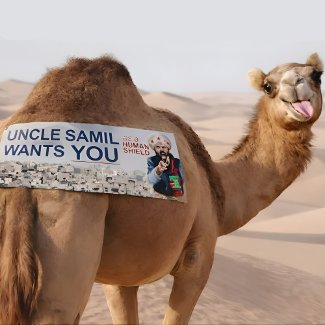
now i use free chatgpt and sometimes it takes a few days to get an image done because i only get a few image generations per day. i don't know if these count as "lifestyle", but i'm trying to express a sense of "yeah, that sounds like something either the devil or a cynical jerk would say..." some kind of connection between the product and the image. with chat gpt i can easily create mockups for any product, not just shirts.

 |  |  | Follow and I'll follow back |  | 10% off Facy.ai |
- Mark as New
- Bookmark
- Subscribe
- Mute
- Subscribe to RSS Feed
- Permalink
- Report Inappropriate Content
01-21-2026 11:38 AM - edited 01-21-2026 11:40 AM
Many creators love Canva..but those who don't do have their reasons. I have not used chatgpt for my mockups. I use 3 free now, Bing Dalle 3, Gemini Image Creator and paid and free Copilot. I don't assemble the mockups in Photoshop. Just work with getting the right prompts to communicate with a tool as to what I "have in my mind" not easy at all. Your lifestyle mockups are very unique...so much detail...( I like the uncle smil, that should sell, actually they both should ... thanks for letting us know about chatgpt for those of us that use "free" your share helps.

